

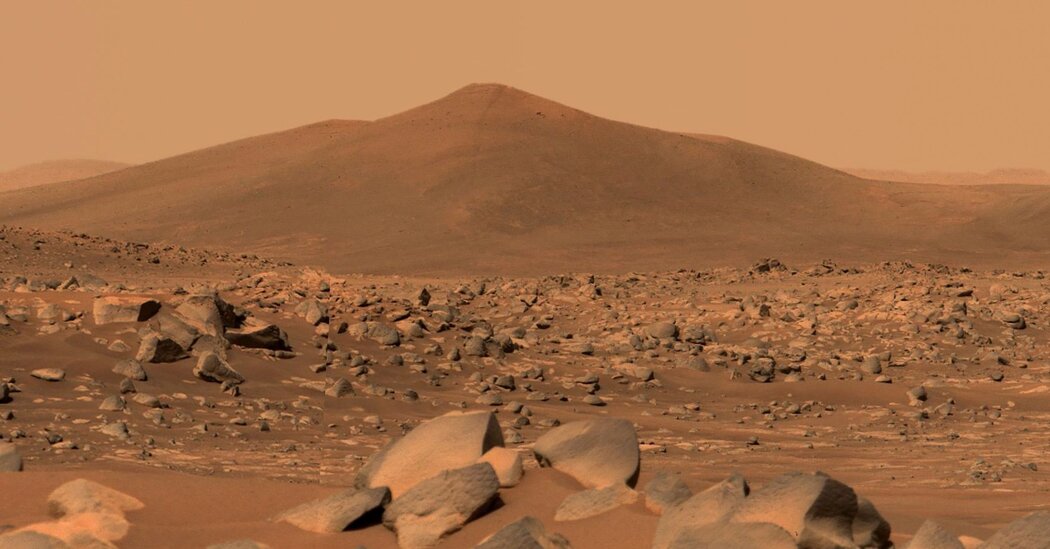
On February 10, 2023, NASA announced that it may have discovered an Earthly fungus capable of surviving on Mars, sparking concerns about potential contamination of the Martian environment. The fungus in question, Cryptococcus neoformans, was found to be highly resistant to extreme conditions, including radiation and extreme temperatures. According to Dr. Kathie Thomas-Keprta, a planetary scientist at NASA’s Johnson Space Center in Houston, Texas, “What followed was unexpected, as the fungus was able to survive in a simulated Martian environment for an extended period.”
The discovery was made as part of a larger study on the potential risks of contamination associated with sending humans to Mars. NASA is currently planning to send its first crewed mission to Mars in the 2030s, and the agency is working to minimize the risk of contaminating the Martian environment with Earth-based organisms. As Dr. Thomas-Keprta noted, “If we’re going to send humans to Mars, we need to make sure that we’re not contaminating the planet with Earth-based organisms that could potentially harm the Martian environment or interfere with our ability to search for signs of life.”
The study found that Cryptococcus neoformans was able to survive in a simulated Martian environment for up to 18 months, despite being exposed to high levels of radiation and extreme temperatures. The fungus was also found to be highly resilient, able to survive in a state of dormancy for extended periods before reactivating when conditions became more favorable. According to Dr. David Smith, a microbiologist at the NASA Ames Research Center in Mountain View, California, “This fungus is incredibly hardy, and it’s able to survive in conditions that would be hostile to most other forms of life.”
The implications of this discovery are significant, as they highlight the need for careful planning and precaution when sending missions to Mars. As Dr. Smith noted, “We need to make sure that we’re taking every precaution to prevent contamination of the Martian environment, not just for the sake of the environment itself, but also to ensure that we’re able to search for signs of life on Mars without interference from Earth-based organisms.” The study’s findings also raise important questions about the potential risks and challenges associated with sending humans to Mars, and the need for further research and development to address these challenges.
In terms of what happens next, NASA will likely continue to study the Cryptococcus neoformans fungus and its potential implications for Mars exploration. The agency may also need to develop new protocols and procedures for preventing contamination of the Martian environment, including the use of more effective sterilization techniques and the development of new technologies for detecting and mitigating the risk of contamination. As Dr. Thomas-Keprta noted, “This is an area of ongoing research, and we’re working to develop new strategies and technologies to address the challenges associated with sending humans to Mars.” The discovery of this hardy fungus serves as a reminder of the complexities and challenges associated with space exploration, and the need for careful planning and preparation to ensure the success of future missions.